Conversion Rate Optimisation: The Ultimate Guide to Frameworks, Tests & Funnel Wins That Skyrocket Revenue
You don’t need more traffic. You need more conversions.
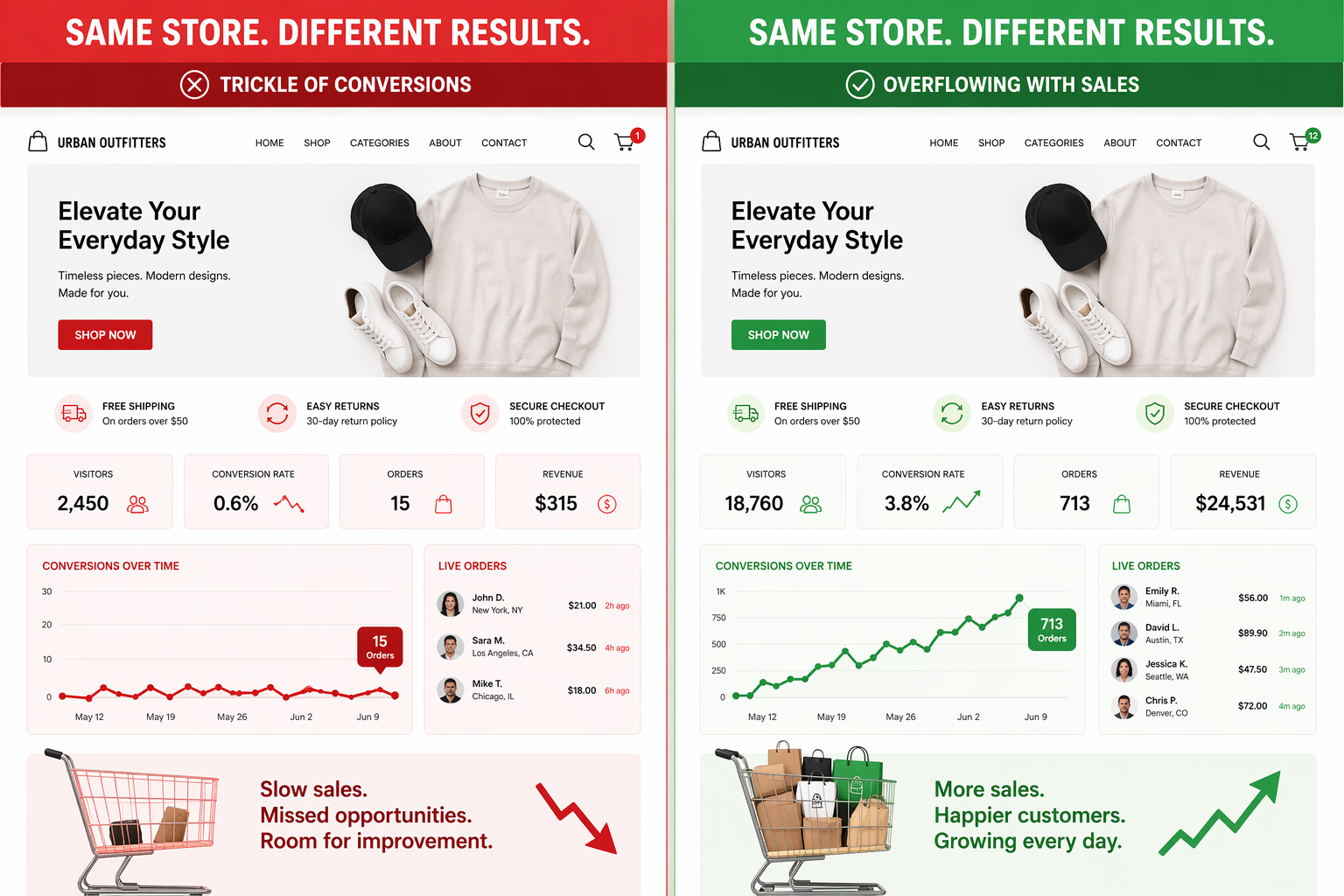
Let’s Say there are Two identical online stores receive 10,000 visitors each month. Store A converts 1% of visitors into customers (100 sales). Store B converts 3% (300 sales). Same traffic, triple the revenue. The difference? Store B mastered conversion rate optimisation.
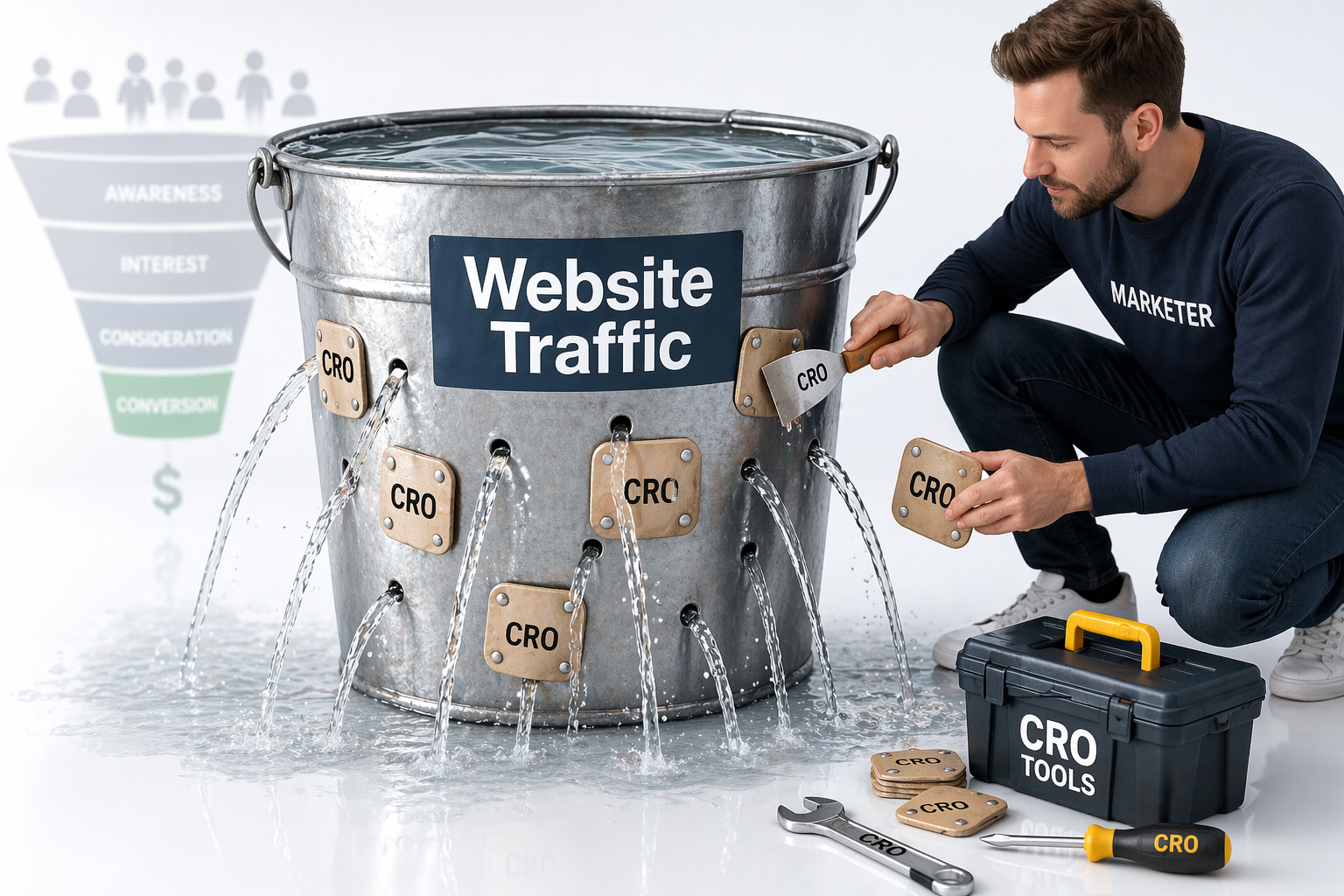
In today’s hyper-competitive digital landscape, throwing money at ads to drive more traffic is like pouring water into a leaky bucket. Smart marketers know that squeezing more value from existing traffic is the secret sauce to sustainable growth. That’s where Conversion Rate Optimisation (CRO) becomes your competitive advantage. CRO is a core component of digital marketing strategies, working alongside channels like search engine optimization to maximize ROI and drive business growth.
Making your existing traffic work harder not only increases conversions but also enhances your overall digital marketing efforts. By improving the effectiveness of all channels, including search engine optimization, CRO ensures that every visitor is more likely to take action, amplifying the impact of your marketing investments.
This comprehensive guide will walk you through battle-tested CRO frameworks, winning tests that move the needle, and funnel optimization strategies that top-performing brands use to convert browsers into buyers. Whether you’re a startup founder bootstrapping growth or a marketing manager tasked with improving ROAS, you’ll discover actionable insights that can transform your conversion rates from mediocre to magnificent.
What is Conversion Rate Optimisation (CRO)?
Conversion Rate Optimisation is the systematic process of increasing the percentage of website visitors who complete a desired action – whether that’s making a purchase, signing up for a newsletter, downloading an ebook, or requesting a demo. Conversion rate calculating typically involves dividing the number of conversions by the total number of visitors and multiplying by 100 to get a percentage; this can be done manually or by using analytics tools and built-in platform features for more accurate measurement.
Think of your website as a sales funnel, not just a digital brochure. Every page, every button, every piece of copy either helps visitors take the next step or creates friction that makes them bounce. CRO is about identifying and eliminating that friction while amplifying what works.
But here’s what most marketers get wrong: CRO isn’t just about “getting clicks.” It’s about understanding user behavior, psychology, and the entire customer journey. A successful CRO strategy considers how users think, feel, and behave at different stages of their buying journey.
CRO fits perfectly into a full-funnel marketing strategy because it maximizes the value of every dollar spent on acquisition. Instead of constantly needing more traffic to grow revenue, you’re making your existing traffic work harder. This creates a compounding effect where improved conversion rates make your advertising more profitable, allowing you to bid higher for premium placements and acquire even more high-quality traffic.
Consider this real example: An e-commerce brand was spending $50,000 monthly on Google Ads with a 2% conversion rate. After implementing strategic CRO improvements, they increased their conversion rate to 2.6% – a seemingly small 0.6% bump. But this 30% relative increase meant the same ad spend now generated 30% more revenue, allowing them to reinvest profits into scaling their campaigns even further. Ultimately, CRO strategies are designed to encourage customers to take the actions that matter most, driving meaningful business outcomes.
Understanding Conversion Rates: The Metrics That Matter (NEW)
Conversion rate optimization starts with understanding the numbers that drive your business forward. At its core, your conversion rate is the percentage of website visitors who complete a desired action—whether that’s making a purchase, signing up for a newsletter, or requesting a demo. Calculating your conversion rate is simple: divide the number of conversions by the total number of visitors, then multiply by 100.
But not all conversions are created equal. Macro conversions are your primary goals, like a completed purchase or a submitted lead form. Micro conversions are smaller steps along the user journey, such as adding a product to the cart, downloading a resource, or watching a demo video. Tracking both macro and micro conversions gives you a clearer picture of how users interact with your site and where they might be dropping off.
Beyond the basic conversion rate, there are several key metrics every CRO program should monitor:
- Average order value (AOV): The average amount spent per transaction. Increasing AOV can boost revenue without increasing traffic.
- Customer acquisition cost (CAC): How much you spend to acquire each new customer. Lowering CAC through improved conversion rates makes your marketing more efficient.
- Bounce rate: The percentage of visitors who leave after viewing only one page. High bounce rates can signal issues with landing page relevance or user experience.
- Exit rate: Where users are leaving your site, helping you pinpoint friction points in the conversion funnel.
- Time on site and pages per session: Indicators of user engagement and interest.
Tracking these key metrics with analytics tools allows you to measure the impact of your optimization efforts, set realistic goals, and identify the biggest opportunities for improvement. Remember, the goal isn’t just to increase your site’s conversion rate—it’s to drive meaningful business outcomes by encouraging customers to take the actions that matter most.
Core Elements of a CRO Strategy
Building a successful CRO strategy requires understanding the key elements that influence visitor behavior, such as UI design, copywriting, landing page design, and trust signals. These key elements work together to enhance user experience, making websites more engaging and user-friendly, which ultimately drives higher conversion rates. Let’s break down the core components that separate high-converting websites from the rest.
User Behavior Analysis
Before making any changes, you need to understand how users actually interact with your site. This isn’t about assumptions or gut feelings – it’s about data-driven insights. User research is also crucial for understanding user motivations and pain points, providing qualitative context that numbers alone can't reveal.
Heatmaps and session recordings are your window into user behavior. Tools like Hotjar, Crazy Egg, and Microsoft Clarity help you gather data by showing exactly where users click, how far they scroll, and where they get stuck. These insights often reveal surprising patterns. For instance, you might discover that most users never scroll past your hero section, indicating your key value proposition isn’t clear enough above the fold.
Session recordings are particularly powerful for identifying friction points. Watch a few dozen recordings of users who didn’t convert, and you’ll often spot common patterns – maybe they’re confused by your navigation, can’t find your pricing, or get distracted by irrelevant content.
Landing Page Optimization
Your landing page is often the first impression visitors have of your brand, and you know what they say about first impressions.
Above-the-fold content needs to immediately communicate your value proposition. Visitors should understand what you offer, who it’s for, and why they should care within 5 seconds of landing on your page. This means your headline, subheading, and hero image must work together to tell a cohesive story.
CTA placement and design can make or break conversions. The best-performing CTAs are specific, action-oriented, and create urgency. Instead of generic “Submit” buttons, try “Get My Free Analysis” or “Start My 14-Day Trial.” The color, size, and placement of your CTAs should make them impossible to miss while maintaining design harmony. Establishing a clear visual hierarchy ensures that key elements like CTAs stand out and effectively guide the user's attention for better engagement and conversions.
Form Optimization
Forms are often the biggest conversion killers, but they're necessary evils for lead generation.
The fewer fields, the better – each additional field you add decreases completion rates. If you need more information, consider progressive profiling, where you collect basic info upfront and gather additional details over time through follow-up interactions.
Smart form design includes features like auto-fill, clear error messages, and progress indicators for multi-step forms. Even small improvements like changing "Email Address" to just "Email" can boost completion rates.
Trust Signals & Social Proof
In an age of online skepticism, trust signals are conversion rate gold.
Customer testimonials, reviews, and case studies provide social proof that your product or service delivers results. But not all social proof is created equal. Specific testimonials that mention measurable results ("increased sales by 40%") are more persuasive than generic praise ("great product!").
Other powerful trust signals include security badges, money-back guarantees, company logos of well-known clients, and media mentions. The key is placing these strategically throughout your conversion funnel, especially near decision points.
Page Speed & Mobile Optimization
Here's a sobering stat: a 1-second delay in page load time can reduce conversions by 7%. In our instant-gratification world, slow websites are conversion killers.
Mobile optimization goes beyond responsive design. With over 60% of web traffic coming from mobile devices, your mobile experience needs to be flawless. This means thumb-friendly buttons, readable text without zooming, and simplified navigation that works on small screens.
Qualitative vs. Quantitative Analysis in CRO (NEW)
Successful conversion rate optimization relies on a blend of qualitative and quantitative data. While numbers tell you what’s happening on your site, qualitative insights reveal why users behave the way they do. Combining both approaches gives you a 360-degree view of user behavior, helping you make smarter decisions and prioritize the right tests.
Quantitative analysis provides the hard data—conversion rates, bounce rates, and user flows—while qualitative research uncovers the motivations, frustrations, and needs behind those numbers. The most effective CRO strategies use both types of data to identify opportunities, validate hypotheses, and create a continuous improvement loop.
Let’s break down how each type of analysis powers your CRO process.
Qualitative Analysis: The Why Behind User Actions (NEW)
Qualitative analysis digs into the human side of conversion optimization. It’s all about understanding the motivations, emotions, and obstacles that shape how users interact with your website. This type of research goes beyond the numbers to answer questions like: Why did a user abandon their cart? What’s stopping visitors from completing your lead form? How do users perceive your value proposition?
Common qualitative data sources include:
- User feedback surveys: Direct input from website visitors about their experience, pain points, and suggestions.
- Session recordings: Watching real users navigate your site reveals confusion, hesitation, and friction points that analytics alone can’t capture.
- Usability testing: Observing users as they complete tasks helps you spot unclear navigation, slow load times, or confusing copy.
- On-site polls and chat transcripts: Quick questions like “What stopped you from purchasing today?” can uncover hidden objections.
By analyzing qualitative data, you gain deep insights into user intent and satisfaction. These findings help you craft more persuasive messaging, streamline user journeys, and remove barriers to conversion. For example, if multiple users mention that your checkout process feels complicated, you can prioritize simplifying it in your next round of CRO tests.
Qualitative analysis is essential for building empathy with your target audience and ensuring your optimization efforts address real user needs—not just surface-level metrics.
Quantitative Analysis: The Numbers That Drive Decisions (NEW)
Quantitative analysis is the backbone of any data-driven CRO strategy. It focuses on measurable, statistically significant data that reveals what’s happening on your website. By tracking key metrics like conversion rates, bounce rates, and average order value, you can identify patterns, spot drop-off points, and measure the impact of your optimization efforts.
Key sources of quantitative data include:
- Google Analytics: Tracks user journeys, traffic sources, and conversion funnels to show where users convert—or where they don’t.
- A/B and multivariate tests: Provide statistically significant data on which variations drive better results.
- Heatmaps and click maps: Visualize where users are clicking, scrolling, or ignoring content.
- Event tracking: Measures specific actions like button clicks, video plays, or form submissions.
Quantitative research helps you answer questions like: Which landing pages have the highest exit rates? What’s the average conversion rate for mobile vs. desktop users? Where in the funnel are users dropping off most frequently?
By leveraging quantitative analysis, you can prioritize high-impact optimization opportunities, set benchmarks, and track progress over time. It’s the foundation for making informed decisions, running effective b tests, and ensuring your CRO program delivers statistically significant improvements.
Google Analytics for CRO: Turning Data into Wins (NEW)
Google Analytics is a cornerstone of any successful conversion rate optimization strategy. As one of the most powerful analytics tools available, it transforms raw website data into actionable insights that drive real business results.
With Google Analytics, you can:
- Set up conversion goals: Track macro and micro conversions, from purchases to newsletter signups, and see which channels drive the most valuable actions.
- Map user journeys: Visualize how users move through your site, identify drop-off points in your conversion funnel, and uncover opportunities to streamline the path to conversion.
- Segment your audience: Analyze user behavior by device, location, traffic source, or user segment to tailor your optimization efforts for different groups.
- Monitor key metrics: Keep a close eye on conversion rates, bounce rates, average order value, and other critical KPIs to measure the impact of your CRO tests.
- Leverage enhanced eCommerce tracking: For online stores, track product performance, cart abandonment, and checkout behavior to optimize every stage of the funnel.
To get the most from Google Analytics, integrate it with tools like Google Tag Manager for advanced event tracking, and use custom dashboards to monitor your most important metrics at a glance. Regularly reviewing your analytics data helps you spot trends, validate hypotheses, and ensure your optimization efforts are moving the needle.
By turning Google Analytics insights into targeted CRO strategies, you can continuously improve conversions, reduce customer acquisition costs, and maximize the value of your existing traffic—making every marketing dollar work harder for your business.
CRO Frameworks That Actually Work
Theory is nice, but frameworks give you actionable structure. Here are the battle-tested frameworks that consistently drive results.
LIFT Model
The LIFT Model evaluates six factors that influence conversions:
Clarity ensures your message is instantly understandable. If visitors need to think about what you're offering, you've already lost them.
Relevance matches your offering to visitor intent. A visitor from a "best project management tools" search should land on a page specifically about project management, not your generic homepage.
Urgency creates psychological pressure to act now rather than later. Limited-time offers, countdown timers, and scarcity messaging (when honest) can significantly boost conversions.
Anxiety represents visitor concerns and objections. Address these head-on with guarantees, testimonials, and clear policies.
Distraction includes any element that doesn't support your conversion goal. Every image, link, and piece of text should either help visitors convert or be removed.
Value Proposition is your unique selling proposition clearly communicated. What makes you different and better than alternatives?
PIE Framework
PIE helps prioritize which tests to run first based on three criteria:
Potential: How much improvement could this test create? A test on your checkout page (where 50% of users drop off) has higher potential than optimizing a page few people visit.
Importance: How much traffic does this page receive? Higher-traffic pages should generally be prioritized.
Ease: How difficult is this test to implement? Sometimes quick wins are worth pursuing to build momentum.
AIDA for CRO
The classic AIDA model adapts perfectly to web conversion optimization:
Attention: Your headline and hero section must grab attention immediately. Use compelling headlines, striking visuals, or surprising statistics.
Interest: Build interest by elaborating on benefits and addressing visitor pain points. This is where you expand on your value proposition.
Desire: Create desire through social proof, detailed benefits, and emotional triggers. Show visitors what life could be like with your solution.
Action: Make the desired action obvious and frictionless. Your CTA should be the natural next step in your narrative.
HEART Framework
Google’s HEART framework provides a comprehensive view of user experience:
Happiness: User satisfaction measured through surveys and feedback.
Engagement: How actively users interact with your site (time on page, pages per session).
Adoption: How many users complete key actions (signups, purchases).
Retention: How often users return to your site.
Task Success: How efficiently users complete desired actions.
By tracking and optimizing these metrics, you can improve conversion rates over time through data-driven enhancements to user experience.
CUB Method
The Context, User, Behavior method focuses on funnel-specific optimization:
Context: What’s the situation when users encounter this page? Are they comparison shopping or ready to buy?
User: Who is the visitor? New or returning? What’s their intent? Analyze different user segments—such as by source, device, or behavior—to tailor optimization strategies for each group.
Behavior: How do users typically interact with this page or funnel stage?
Framework Comparison
Framework Comparison
Framework
Best For
Complexity
Time to Implement
LIFT
Landing pages
Low
1-2 weeks
PIE
Test prioritization
Low
Ongoing
AIDA
Content structure
Medium
2-4 weeks
HEART
Overall UX
High
1-3 months
CUB
Funnel optimization
Medium
2-6 weeks
Key points:
- LIFT and PIE are best for quick wins with low complexity and fast implementation.
- AIDA and CUB offer more structured approaches for content and funnel optimization, requiring moderate effort.
- HEART is suited for comprehensive UX improvements but involves higher complexity and longer timelines.
Tests That Move the Needle: CRO Testing Types
Testing is where CRO theory meets reality. Establishing a structured testing program is essential for continuous optimization and improvement, ensuring that your website performance evolves based on data-driven insights. Here are the testing methodologies that consistently drive results, along with real-world examples.
A/B Testing
A/B testing compares two versions of a page element to see which performs better. It’s the foundation of CRO because it provides statistically significant proof of what works. When choosing an A/B testing tool, look for key features such as ease of use, advanced targeting options, and robust reporting capabilities to ensure effective optimization.
Button color tests might seem trivial, but they can have surprising impacts. HubSpot famously increased conversions by 21% simply by changing their CTA button from green to red. The lesson isn’t that red is better than green – it’s that contrast and visibility matter.
Headline tests often produce the biggest wins because headlines are the first thing visitors read. Buffer increased signups by 90% by changing their headline from “Buffer makes it super easy to share any page you’re reading” to “A Smarter Way to Share on Social Media.”
Image tests can dramatically impact emotional connection. People respond to images faster than text, so testing hero images, product photos, or even the absence of images can reveal surprising insights.
Multivariate Testing (MVT)
While A/B testing changes one element, multivariate testing examines multiple changes simultaneously to understand how they interact.
For example, you might test different combinations of headlines, images, and CTA colors to find the winning combination. MVT requires significantly more traffic than A/B testing but can uncover optimization opportunities that single-element tests miss.
Split URL Testing
Sometimes you need to test completely different page layouts or concepts. Split URL testing directs traffic to entirely different pages, allowing you to test radical design changes or different value propositions.
This is particularly useful for testing new landing page concepts or entirely different approaches to your conversion funnel.
Personalization Tests
Generic experiences are becoming obsolete. Personalization tests show different content to different visitor segments based on demographics, behavior, or traffic source.
Amazon's personalized homepage is the gold standard – every visitor sees products and recommendations tailored to their browsing and purchase history. B2B companies can personalize based on company size, industry, or referring source.
Usability Testing
While quantitative tests tell you what’s happening, usability testing reveals why. Watching real users interact with your site uncovers friction points that data alone might miss. User testing involves observing real users perform specific tasks, which helps identify friction points and gather qualitative insights that inform website optimization and conversion rate improvements.
Usability testing often reveals issues like confusing navigation, unclear copy, or technical problems that create barriers to conversion.
Common Testing Pitfalls to Avoid
Underpowered tests are perhaps the biggest mistake. Running tests without sufficient traffic leads to inconclusive results and wasted time. Use statistical significance calculators to determine required sample sizes before launching tests.
No control group makes it impossible to attribute changes to your optimization efforts versus external factors like seasonality or marketing campaigns.
Stopping tests early because you see promising results can lead to false positives. Let tests run until they reach statistical significance, typically requiring at least 1-2 weeks of data.
Conversion Funnel Optimisation: Wins by Funnel Stage
Different funnel stages require different optimization strategies. Focusing on each funnel stage is essential for improving conversions throughout the customer journey. Here’s how to maximize conversions at each stage of the customer journey.
Top of Funnel (Awareness)
At this stage, visitors are just discovering your brand. They're not ready to buy – they're gathering information and building awareness.
Strategic CTA placement on blog posts should focus on education rather than sales. Instead of "Buy Now," try "Learn More" or "Get the Free Guide." The goal is moving visitors deeper into your funnel, not immediate conversion.
Scroll depth tracking helps optimize content length and placement of key messages. If most users only read the first few paragraphs of your blog posts, that's where your most important points should live.
Sticky headers with soft CTAs can capture attention as users scroll without being pushy. A sticky header with "Get Free Updates" performs better than aggressive sales messaging at this stage.
Middle of Funnel (Consideration)
Consideration-stage visitors understand their problem and are evaluating solutions. They need proof that your solution is the right choice.
Product comparison tools address the "which option is best" question directly. Instead of making visitors research competitors themselves, provide honest comparisons that highlight your advantages.
Lead magnet optimization focuses on value-driven offers that demonstrate expertise. A comprehensive buyer's guide performs better than a generic newsletter signup because it provides immediate value.
Explainer videos can dramatically boost conversions by addressing common questions and objections. Dropbox's original explainer video was instrumental in their growth, increasing conversions by 10%.
Bottom of Funnel (Conversion)
Bottom-funnel visitors are ready to buy but might need final reassurance or a gentle push.
Exit-intent popups capture visitors who are about to leave with last-chance offers or incentives. While they can be annoying if overused, strategic exit-intent campaigns can recover 10-15% of abandoning visitors.
Customer testimonials should be prominently featured near purchase decisions. Video testimonials are particularly powerful because they’re harder to fake and create emotional connections. Well-designed product pages that clearly present product details and showcase testimonials help build trust and drive conversions at this critical stage.
One-click checkout options reduce friction at the crucial final step. Amazon’s patented one-click purchasing was a game-changer, and similar streamlined checkout processes can significantly boost completion rates.
Post-Purchase (Retention & Upsell)
The sale isn't the end – it's the beginning of the customer relationship.
Thank-you page optimization turns a typically wasted page into a conversion opportunity. Use this high-attention moment for upsells, social media follows, or referral requests.
Cross-sell offers should be relevant and add genuine value. Amazon's "customers who bought this also bought" recommendations generate billions in additional revenue.
NPS surveys help identify potential advocates and address concerns before they become problems. The key is timing – survey too early and customers haven't had time to form opinions; too late and their experience isn't fresh.
CRO Tools You Should Be Using in 2026
The right tools make CRO systematic rather than guesswork. Building a robust CRO tech stack is essential for staying ahead of future trends and ensuring seamless integration of tools. Here are the essential tools organized by purpose.
Analytics & Behavior Tools
Google Analytics 4 provides foundational conversion tracking and audience insights. Set up goals for each funnel stage to understand where visitors drop off.
Mixpanel offers more sophisticated event tracking for SaaS and app-based businesses, allowing you to track user behavior across sessions and devices.
Hotjar combines heatmaps, session recordings, and user feedback in one platform, making it perfect for understanding user behavior. Session recording tools like those in Hotjar help observe user behavior, identify friction points, and optimize website navigation by analyzing where users click, scroll, and hesitate.
Testing Tools
VWO (Visual Website Optimizer) offers comprehensive A/B and multivariate testing with an intuitive visual editor.
Optimizely provides enterprise-level testing capabilities with advanced targeting and personalization features.
Since Google Optimize was discontinued,Convert.com and AB Tasty have emerged as strong alternatives for businesses seeking Google-integrated testing solutions.
Page Builders
Unbounce specializes in landing page optimization with built-in A/B testing and conversion-focused templates.
Instapage offers advanced personalization features and integrates well with advertising platforms for cohesive campaign experiences.
Survey & Feedback Tools
Typeform creates engaging surveys that feel more like conversations, leading to higher completion rates and better insights.
Qualaroo provides targeted on-site surveys that can reveal why visitors aren't converting.
AI-Powered Tools
Microsoft Clarity offers free heatmaps and session recordings with AI-powered insights about user behavior patterns.
Wynter uses AI to analyze messaging and positioning, providing feedback on clarity and persuasiveness.
Copy.ai can generate multiple headline and copy variations for testing, speeding up the creative process.
Real-World Brand Examples: CRO Wins
Learning from successful brands provides concrete examples of CRO principles in action.
Dropbox: The Power of Simplicity
Dropbox's early landing page was a masterclass in simplicity. Instead of explaining technical features, they focused on one clear benefit: "Your stuff, anywhere." A simple explainer video demonstrated the product in action, and a single, prominent CTA made the next step obvious.
The result? A 10% increase in signups from their already successful page. The lesson: sometimes less is more when it comes to conversion optimization.
Booking.com: Testing Everything, Always
Booking.com runs over 1,000 A/B tests simultaneously, creating a culture of continuous optimization. They test everything from button colors to entire booking flows.
One famous test involved adding urgency messaging ("Only 2 rooms left!" or "Booked 3 times in the last hour"). While some criticized these messages as manipulative, they significantly increased conversions by creating genuine urgency for time-sensitive travel bookings.
Netflix: Personalization at Scale
Netflix's homepage is different for every user, showcasing content based on viewing history, ratings, and behavioral patterns. This isn't just personalization – it's conversion optimization applied to content discovery.
By making relevant content immediately visible, Netflix increases engagement and reduces churn. Their sophisticated recommendation engine drives over 80% of content discovery on the platform.
HubSpot: Smart CTAs Drive Results
HubSpot pioneered "smart CTAs" that change based on visitor behavior and lifecycle stage. New visitors see "Get Started" buttons, while existing leads see "Login" or "Upgrade" options.
This simple personalization strategy increased click-through rates by 42% because visitors always saw the most relevant next step for their situation.
Case Study Deep Dive: The $300 Million Button
Sometimes the smallest changes have the biggest impact. An e-commerce site was losing millions in revenue due to a seemingly minor checkout issue.
The Problem: New customers were forced to create accounts before purchasing, creating friction at the final step.
The Solution: Adding a "Guest Checkout" option alongside the account creation requirement.
The Result: A 45% increase in purchases, generating an additional $300 million in annual revenue.
The Learning: Never underestimate the power of reducing friction, especially at critical conversion points.
How to Build a CRO Roadmap (and Stick to It)
CRO success requires systematic planning, not random optimization attempts. The conversion rate optimization process is a structured, step-by-step methodology that includes auditing, goal setting, strategy development, and ongoing testing.
The 6-Step CRO Process
1. Audit: Analyze your current conversion funnel using analytics, heatmaps, and user feedback, making sure to gather both quantitative and qualitative data to identify the biggest opportunities.
2. Hypothesize: Form specific, testable hypotheses about why conversions are low and what changes might improve them.
3. Prioritize: Use frameworks like PIE to rank opportunities by potential impact, importance, and ease of implementation.
4. Test: Design and run statistically valid experiments to test your hypotheses.
5. Analyze: Examine results objectively, looking beyond just conversion rates to understand user behavior changes.
6. Implement: Roll out winning variations and document learnings for future reference.
The 90-Day CRO Roadmap
Days 1-30: Foundation
- Install tracking and analytics tools
- Conduct conversion audit
- Identify top 10 optimization opportunities
- Set up first A/B test
Days 31-60: Testing
- Run 2-3 simultaneous tests
- Gather user feedback through surveys
- Analyze initial results
- Plan next round of tests
Days 61-90: Scaling
- Implement winning variations
- Design more sophisticated tests
- Begin personalization experiments
- Plan next quarter's priorities
Create a simple spreadsheet to track your tests with columns for hypothesis, expected impact, test status, results, and learnings. This creates accountability and helps identify patterns in what works for your specific audience.
Common CRO Mistakes That Kill Conversions
Even well-intentioned optimization efforts can backfire. Regularly monitoring your site's conversion rate is crucial to identify issues and track progress over time. Here are the most common mistakes that hurt rather than help conversions.
Focusing only on design, not behavior leads to beautiful websites that don’t convert. Pretty doesn’t always equal persuasive. Your design should guide users toward conversion, not just look impressive.
Ignoring mobile optimization is conversion suicide when 60%+ of traffic comes from mobile devices. If your mobile experience is an afterthought, you’re losing the majority of potential conversions.
Testing too many variables makes it impossible to understand what’s driving results. Test one significant change at a time to get clear, actionable insights.
Unclear or weak CTAs leave visitors unsure about next steps. Every page should have one primary call-to-action that’s obvious, specific, and compelling.
Not aligning with traffic source intent creates confusion when visitors arrive. Someone clicking an ad about “project management software” shouldn’t land on your generic homepage – they should see project management-specific content.
Data & Stats That Matter
Understanding industry benchmarks helps set realistic expectations and identify opportunities:
- Average conversion rates by industry: E-commerce (2-3%), SaaS (3-5%), Lead generation (2-4%)
- Mobile vs desktop: Mobile conversion rates average 40-50% lower than desktop
- Page load time impact: Each additional second of load time reduces conversions by 7%
- Trust signal impact: Customer reviews can increase conversions by up to 270%
- Personalization results: Personalized CTAs perform 202% better than default versions
These statistics aren't goals – they're starting points for understanding what's possible with systematic optimization.
Frequently Asked Questions
What is a good conversion rate?
Conversion rates vary dramatically by industry, traffic source, and business model. E-commerce sites typically convert 2-3% of visitors, while B2B SaaS might see 3-5%. However, focusing on improving your own conversion rate is more valuable than comparing to industry averages.
How long should you run an A/B test?
Most tests should run for at least 2-4 weeks to account for weekly behavior patterns and gather sufficient data. However, the key factor is statistical significance – you need enough conversions in each variation to be confident in results, typically at least 100-200 conversions per variation.
What's the best CRO tool for beginners?
Google Analytics combined with Hotjar provides a solid foundation for understanding user behavior without significant investment. For testing, VWO offers an intuitive interface that's perfect for beginners, while Unbounce is excellent for landing page optimization.
Can CRO help B2B websites?
Absolutely. B2B CRO often focuses on lead generation rather than direct sales, but the principles remain the same. B2B optimization might involve improving demo request forms, optimizing case study pages, or personalizing content for different industries.
How do you know if a CRO test is successful?
Success depends on your goals, but statistical significance is crucial. A test is successful if it produces a statistically significant improvement in your primary conversion metric. However, also consider secondary metrics like user engagement and long-term customer value.
What's the ROI of conversion rate optimization?
CRO typically delivers exceptional ROI because it improves results from existing traffic rather than requiring additional advertising spend. Many businesses see 2-5x returns on CRO investments, with some achieving much higher returns from breakthrough optimizations.
Conclusion: CRO is Continuous, Not a Campaign
Conversion rate optimization isn't a one-time project – it's an ongoing process of understanding your users better and systematically removing barriers to conversion.
The most successful companies treat CRO as a core competency, not a side project. They build cultures of testing, learning, and iterating that compound over time. What starts as a 10% improvement in conversion rates becomes 50% or 100% gains as optimizations build on each other.
Remember that every visitor who doesn't convert represents lost revenue and a missed opportunity to serve someone who needs your solution. By systematically optimizing your conversion funnel, you're not just improving business metrics – you're creating better experiences for real people trying to solve real problems.
The frameworks, tools, and strategies in this guide provide your roadmap, but success comes from consistent execution and relentless focus on understanding your users. Start with one test, measure the results, learn from the data, and keep iterating.
Your competitors are fighting for more traffic. Smart marketers optimize for more conversions. Which approach will you choose?
Ready to transform your conversion rates? Subscribe for more marketing insights that help you grow smarter, not harder. Get weekly strategies, case studies, and actionable tips delivered straight to your inbox.